3D Printer Question: Specks for D-Ring and High Lift Jack Handle Isolator

JeepJKPA2NC

Active Member
Joined
Jul 9, 2014
Location
Cary
I have a 3D Printer and looking for anyone who has done a D-Ring and High Lift Jack Isolator. I have done some really cool things with this 3-D printer and looking for the specks for these two items.
upload_2017-3-28_11-36-39.png
upload_2017-3-28_11-36-56.png
upload_2017-3-28_11-37-16.png
 

Attachments

  • 3D Printer Jeep Defrost item.jpg
    3D Printer Jeep Defrost item.jpg
    131.9 KB · Views: 242
  • 3D Printer Jeep Cargo.jpg
    3D Printer Jeep Cargo.jpg
    155 KB · Views: 267
  • 3D Printer Jeep Windshield light bracket.jpg
    3D Printer Jeep Windshield light bracket.jpg
    119.3 KB · Views: 241
Whats the blue thing?

The two gray parts are really simple to replicate in CAD if you have the basic dimensions like bolt pattern, diameter, the flange width that the part in the right-hand picture sits on, etc.

I'm not sure what you're asking though, are you looking for CAD files?
 
Not any help, but what kinda dimensions can you handle? I've been looking for someone that can handle 2.5'x4"x4"...and the length has been a deal killer with anyone I've talked to.
 
Man, having printed a fair amount of stuff, neither of those things are anywhere I'd trust printed pla or abs. That being said, you're going to want to measure your Jack and add some clearance as the factory isolator is polyurethane type material and stretches. And that being said, those parts look good, what printer?
 
Last edited:
Not any help, but what kinda dimensions can you handle? I've been looking for someone that can handle 2.5'x4"x4"...and the length has been a deal killer with anyone I've talked to.
The only printers that have a bed that size are super high dollar.
Your better bet is to figure out how to make it in 2 pieces and fit/weld it together.
We've made some huge stuff at work in multiple pieces (using a $100k machine w/ a 15" bed) and exoxying it together. If you use the right combo of stuff and design the seems right there are no strength issues.
 
The only printers that have a bed that size are super high dollar.
Your better bet is to figure out how to make it in 2 pieces and fit/weld it together.
We've made some huge stuff at work in multiple pieces (using a $100k machine w/ a 15" bed) and exoxying it together. If you use the right combo of stuff and design the seems right there are no strength issues.

That's the traditional way to rapid prototype with larger parts.
 
Man, having printed a fair amount of stuff, neither of those things are anywhere I'd trust printed pla or abs. That being said, you're going to want to measure your Jack and add some clearance as the factory isolator is polyurethane type material and stretches. And that being said, those parts look good, what printer?

I do exactly nothing with FDM printing at work because of poor strength/temperature/surface finish. I think its fun that people have their own printers at home and stuff, but FDM just really isn't useful to me... It's about the cheapest process, which is really the only attraction. Well, filament comes in lots of colors, that's the other attraction I guess.


Oh, I take that back. I did make some FDM fixtures to position things while they were bonded. That worked great. They were blue, because why shouldn't assembly jigs be fun colors?

I think it needs to be said that both of the gray parts are not really optimized to be made out of plastic. You can do whatever you can think up, and whatever your CAD skills allow, so making something like that bracket on the windshield hinge (I don't actually know what it does) could take more advantage of the 3D capability, instead of being something that can be simply fabricated out of flat plate. I would just make it out of flat plate instead of printing it, because then it would be indestructible.

The other part needs some filleting at the corners, because those sharp 90degree internal corners are stress risers and very weak.

Both parts could use some metal hard points at the holes so they don't crush under bolt loading.
 
Last edited:
There are some really high strength, high temp etc FDM materials that are great for durability (e.g. Ultem) but you gotta be willing to pay $$$ for it.
For the isolator mounts, adding a layer of rubber insulator will go a long way to compensating for the brittleness of plastic
 
Thanks for the input.
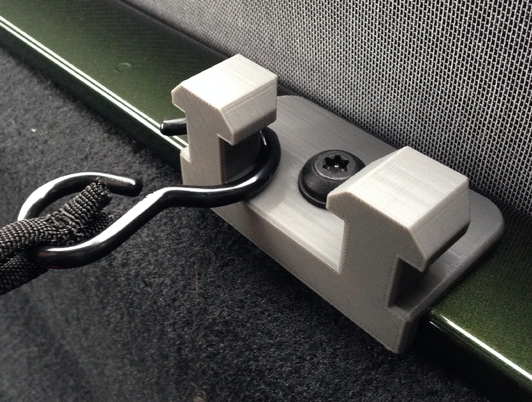
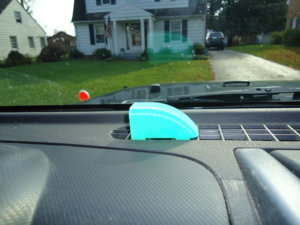
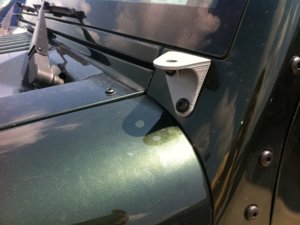
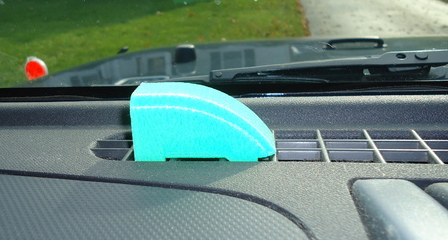
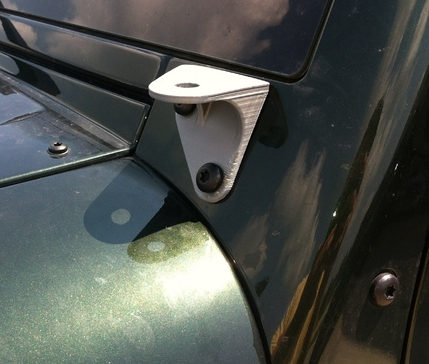
To clarify the pictures show items i have already made for my jeep. The greenish looking vent one is for the defrost. In the JK the location of where the air comes out to defrost the windshield takes longer to hit over in the corners. With these pieces it re-directs the airflow over into each corner of the windshield so there is equal defrost on the windshield. The Grey piece on the outside of the windshield is for a light mount and the other grey hook thing is what i have in the back of the jeep to hold down a number of things. I use the existing hardware for the hardtop and they just bolt right into place. the filament I get is pretty strong and holds up well under pressure. I was thinking if anyone had created the D-Ring and High Lift Isolator they would have all the specks so I can just punch into the printer.
 
If you're talking about one of these isolators
Amazon.com: Hi-Lift Jack HK-B Black Handle-Keeper: Automotive
I think you're going to find that you don't want to make that out of plastic, it really needs to either be rubber or lined with rubber.
2 reasons.
1 - The problem with most plastic is it is brittle and will crack under stress. Probably not on-road driving but of you actually go offroad and the trip is bumpy (as it should be) there is a lot of shock to that piece. Actually same w/ your light mounts. Now you could use high-impact filaments but the cost of materials + time will be more than buying the unit.
2 - it needs to be a really snug fit to avoid rattling. it will be very hard to make it plastic and snug enough to not vibrate but easy to slide on.

JMHO
 
Ah, I finally realized what you're asking after that link was posted. I was very confused.

I know you want to print things, but both of those parts are cheap enough that I wouldn't bother. There are rapid prototyping elastomers that would well for those parts, but they are not compatible with your type of printer and are also far more money to get printed than the parts themselves would cost.
 
Back
Top