Math Question

Futbalfantic

Well-Known Member
Joined
Aug 5, 2006
Location
Charlotte
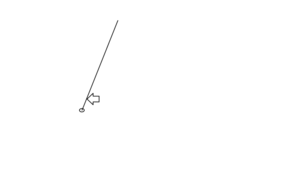
Lets say we have a pole like picture below. The pole is 60 ft long. The pole itself weighs 1 pound per foot decreasing to .25 pounds per foot evenly. At the end of the pole there is a 8 pound weight. The end of the pole is immobile. The arrow is a support that is 3 feet up the length from the end. The pole is angled at 15 degrees. How much weight does the support have to hold?

How is this calculated? What is this problem called? Google is no help if you don't know what you are looking for.
 

Attachments

  • Untitled.png
    Untitled.png
    4.2 KB · Views: 281
Split it up:

First - find weight of the pole (hehheh) - maybe Google a volume and weight calculator
and try to get it to see it as a cone, with your "dimensions" (weights)?

Second - Google calculating weight on a fulcrum, or lever.....hopefully
 
The weight part isn't an issue. I was including that bc I believe it to be important to the solution.:confused: But the fulcrum equation doesn't help terribly; I think. Because it's at a near virtical angle the equation needs to be modified. Maybe the change in distance on the horizontal plane is what needs to be calculated. But then again how does the decreasing weight play into that.
 
My small brain says it weighs 1 pound per foot. Dropping .25 per foot evenly means very shortly you don't have a pole to worry about. One pound dropped by .25 per foot is only gonna last another 4 feet. Including the one you started with.
 
It's a statics problem. You want to know a force and not a weight though if I'm understanding correctly. Saying "weight" sort of implies a force only in the vertical direction", which is the direction of gravity. The pole is leaning, so you'll have a resultant force that is partly vertical and partly horizontal, maybe close to perpendicular to the pole.
The statics method is to calculate the weight of the pole, then sum the forces and moments about a convenient point like the end if the pole, then solve for the force on the support.
 
Yeah force was the word I was looking for. I'm not particularly concerned
My small brain says it weighs 1 pound per foot. Dropping .25 per foot evenly means very shortly you don't have a pole to worry about. One pound dropped by .25 per foot is only gonna last another 4 feet. Including the one you started with.

No meaning foot 1 is 1lbs foot 2 is 84/85th's lbs continuing down to 0.25 lbs per foot.

It's a statics problem. You want to know a force and not a weight though if I'm understanding correctly. Saying "weight" sort of implies a force only in the vertical direction", which is the direction of gravity. The pole is leaning, so you'll have a resultant force that is partly vertical and partly horizontal, maybe close to perpendicular to the pole.
The statics method is to calculate the weight of the pole, then sum the forces and moments about a convenient point like the end if the pole, then solve for the force on the support.

Yeah Force was the word is was looking for. And I'm not too worried about the vector of the force just trying to find the way to calculate it. Do you have any idea where I can find the literature to solve this?
 
Take weight at both ends(per foot), sum those, divide by two and multiply by length. That gives pole weight (force, since it's measured in pounds)

T=f*r*cos , so let's say the pole is mounted at the end, assume the pole is linearly weighted, (w/2*60+8*60)*cos15 would be your torque on the mount. I think. Check rationality on that. It's late.

Exact would involve much more math than I want to do right now on my phone. Basically it's the same thing, except you need to account for the length and decreasing weight by calculus. If it's vitally important to be 100% accurate, pm me. Otherwise overrate the mount by 2x the weight to give a 50% plus margin.. and if it's going to have a flag on it, you should add more strength to account for wind loading.
 
Last edited:
Yeah force was the word I was looking for. I'm not particularly concerned


No meaning foot 1 is 1lbs foot 2 is 84/85th's lbs continuing down to 0.25 lbs per foot.


Yeah Force was the word is was looking for. And I'm not too worried about the vector of the force just trying to find the way to calculate it. Do you have any idea where I can find the literature to solve this?

So said pole is 1 lb per foot at the bottom. Weighs .25 per foot at top. Equally reduces per foot between.
So I would want to know total weight. Weight of lever. Weight at supported moment. Factor gravitational force related to lever length and added weight. But also takes in account the equal opposite force applied to pole below said support. In this case it isn't in the ground for opposing support. Sooooo said support does not matter it will still tip over.

Still lost. Good luck. I didn't finish statics but got a decent grasp of forces, balancing them, and loads on points in space. Enough to decide it was not something I enjoyed. I'm more of the Guy you hire to build it when you get it figured.:confused:
 
I need to draw a diagram this weekend when I get time.
The weight of the pole is easy to calculate, and it's easy to do as a statics problem (sum of moments, sum of forces) because the tapered pole can be split into a triangle with center of mass 1/3 down the length, and a rectangle with center of mass 1/2 down the length. So two masses and two lengths for the pole and that's easy to use in the summation equations. You've got weight per foot, and length, and that's the only geometry you need.

The rectangle is 60ft x 0.25 lb/ft, with center of mass at 30ft.
The (right angle) triangle is 60ft long and 0.75lb/ft at the other side, with center of mass at 20ft from the big end.
The areas of those shapes are the weights (the units cancel when multiplied, etc.)

That's as complex as it needs to be, because there's no need to find the center of mass of the pole as a tapered cylinder for summation equations because it doesn't get you anything. You don't care about the pole, you care about the forces on the support.

Also, what angle is the support? That can be pretty important to the calculation if it's something like a strut that is best used in compression along it's axis.
 
Last edited:
I need to draw a diagram this weekend when I get time.
The weight of the pole is easy to calculate, and it's easy to do as a statics problem (sum of moments, sum of forces) because the tapered pole can be split into a triangle with center of mass 1/3 down the length, and a rectangle with center of mass 1/2 down the length. So two masses and two lengths for the pole and that's easy to use in the summation equations. You've got weight per foot, and length, and that's the only geometry you need.

The rectangle is 60ft x 0.25 lb/ft, with center of mass at 30ft.
The (right angle) triangle is 60ft long and 0.75lb/ft at the other side, with center of mass at 20ft from the big end.
The areas of those shapes are the weights (the units cancel when multiplied, etc.)

That's as complex as it needs to be, because there's no need to find the center of mass of the pole as a tapered cylinder for summation equations because it doesn't get you anything. You don't care about the pole, you care about the forces on the support.

Also, what angle is the support? That can be pretty important to the calculation if it's something like a strut that is best used in compression along it's axis.

Lets say that support is a wire attached at a 90* angle. I misjudged the weight. Forget the tapering weight and say the total weight is 20 lbs
 
Take the sum of the moment about the fixed end of the pole and set it equal to zero. You'll need to find the center of mass of the flag pole to do this. Also don't forget to split the force your solving for into x and y components.

Sent from my SAMSUNG-SM-G890A using Tapatalk
 
Last edited:
Take the sum of the moment about the fixed end of the pole and set it equal to zero. You'll need to find the center of mass of the flag pole to do this. Also don't forget to split the force your solving for into x and y components.

Sent from my SAMSUNG-SM-G890A using Tapatalk

This doesn't work without summing the forces in x and y as well, else you can't solve it. If you just use a moment equation by itself, you have one equation and two variables (the x and y components of the force). I'm still debating myself on that one, and will have to work the problem because I might be missing something simple.
Having a cable perpendicular to the pole kind of sidesteps that though, with some assumptions. Then a single moment summation works fine. Any solution works fine that assumes the resultant is perpendicular to the pole
 
Last edited:
Okay, let's get this rolling. First 3-minute sketch (not to scale):

IMG_20171028_162723147.jpg


The tapered pole can be modeled as a triangle and a rectangle. It doesn't really matter what the center of gravity (centroid really) of the tapered pole is, because it's complicated to calculate and doesn't add any value. But, the centroid of the triangle and the rectangle are simple, because they're just basic shapes. So for the moment equations, you just use the location and weights of each shape, instead of having to calculate the location and weight of the pole as one single body. It's much, much easier that way, as you will see later.

Like I said before, you have weight per length, and you have length, so the weight of the shape is just the area of the shape.

The centroid of the triangle is 1/3 down the length, so 20 feet down the pole. The weight is 22.5 pounds. That's it, done.
The centroid of the rectangle is 1/2 down the length, so 30 feet down the pole. The weight is 15 pounds. That's it, done.

Son bitch, my calculator batteries are dead and it won't turn on.
 
Last edited:
3-minute sketch number 2.

IMG_20171028_171420066.jpg


So this is the difference between a cable at 90 degrees to the pole, and any other type of support.

In the top diagram, the cable tension is 90 degrees to the pole, and that's simple to calculate with a single moment summation.

In the bottom diagram, any other type of support (strut, etc.) would have a force in the X and a force in the Y direction. Not a big deal, but more equations are necessary unless you know the angle (theta) of the resultant force or something along those lines. If you don't know that angle or whatever, you have 4 unknowns (the X and Y force component at support point S, and the X and Y forces at point A) and would then need 4 equations. So that would mean probably a moment summation about the base of the pole, an X force summation, a Y force summation, and a moment summation about the support point.

....and yes, I neglected to draw X-Y coordinate system on the diagrams. :p
 
Last edited:
Back
Top