

orange150
Well-Known Member
- Joined
- Mar 20, 2005
- Location
- Fairfax City, VA
So, on my way home from work this happened:
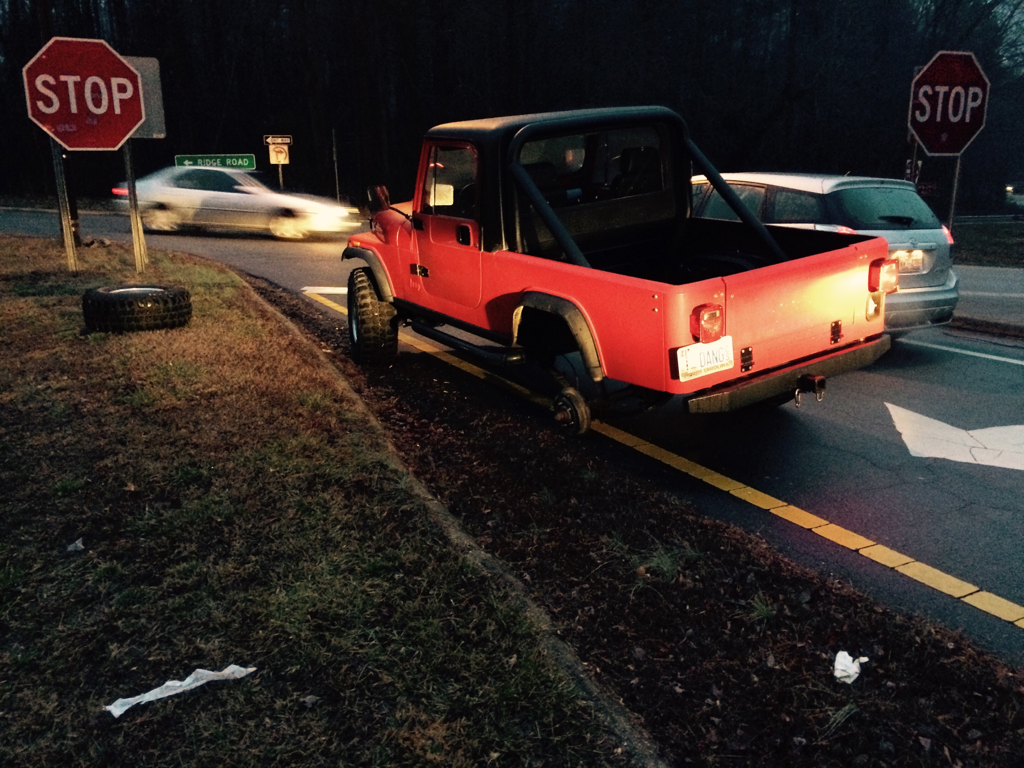
All my lug nuts on that wheel backed off and promptly vanished.
Which has started a debate on alloy wheels vs. steel wheels.
One of my buddies swears that because the alloy wheels I have heat and cool at a different rate than all the steel they're mounted to, it caused my lug nuts to back off. (which is why he only runs steelys)
Another calls BS to that theory, and that it is a torquing from when they were installed (well over a year ago) issue.
A lot of articles state you should retorque after 500 miles on alloys, something I have never done on any previous vehicle and never had issues with.
I've run both, and have never had an issue until tonight.
What say you?
All my lug nuts on that wheel backed off and promptly vanished.
Which has started a debate on alloy wheels vs. steel wheels.
One of my buddies swears that because the alloy wheels I have heat and cool at a different rate than all the steel they're mounted to, it caused my lug nuts to back off. (which is why he only runs steelys)
Another calls BS to that theory, and that it is a torquing from when they were installed (well over a year ago) issue.
A lot of articles state you should retorque after 500 miles on alloys, something I have never done on any previous vehicle and never had issues with.
I've run both, and have never had an issue until tonight.
What say you?


 Truck didn't sell either.
 Alloy wheels seem much more sensitive to improper torque and lug taper. The faces get deformed and seating the lug to see true torque is harder to achieve. So it rides on a minimal contact area and quickly wears this down, becoming loose.


