
You are using an out of date browser. It may not display this or other websites correctly.
You should upgrade or use an alternative browser.
You should upgrade or use an alternative browser.
Winches to suck up suspension - School Me
- Thread starter lumpy
- Start date


superpile
Probably running in circles
- Joined
- Jan 17, 2006
- Location
- Fairview nc
It is to pull one end down to the bump stops usually. on the rear it changes the lever piont (point you roll end over end) when you desend a steep dropoff. On the front it is to help you climb steeper without roll back. on some obstacles when flat you can suck one end up and actually cause the rig to rock into some traction to continue fwd motion due to the weight per tire and roll center being forced to change. I love them and I think they are worth the work to install on trail rigs just as much as a comp rigs.

willness33
Here for the memes
- Joined
- May 3, 2005
- Location
- Alexis,NC
Imagine a coiled/linked rear end. Now imagine going down a steep hill and having said rear end unload on you during your descent. Basically, it keeps you from going ass over teacup.
336wheeler
Well-Known Member
- Joined
- Sep 9, 2006
- Location
- Boone
From what I've read, its not that your suspension will unload abruptly enough to the point where it will actually flip the vehicle over, but more of a driver's peace of mind kind of thing. Also on front suspensions, having the coilovers unload while climbing may feel like the vehicle is about to tip backwards, but is also a peace of mind thing. But take that with a grain of salt; its just what I've read about it.
willness33
Here for the memes
- Joined
- May 3, 2005
- Location
- Alexis,NC
I like peace of mind.

Rich
Asshole at large
- Joined
- Mar 17, 2005
- Location
- Central PA
Superpile nailed all the facts... It's alot more than peace of mind, I've watched it help on climbs (on the front)..

paradisePWoffrd
Recovering Project Junkie
- Joined
- Nov 5, 2005
- Location
- Newton, NC
so do most of you just hook your normal winch up to it, and just unhook when you need it.... or do you use a seperate one? if you use one just for that, how big of a winch do you really need?

- Joined
- Mar 20, 2005
- Location
- Morganton NC
I have seen as small as 2500lb winches for this use. I also saw a guy who had a 8000lb in the rear for double duty, winch from behind and to suck up his suspension. I thought that was a pretty good idea.
35xj
Well-Known Member
- Joined
- Aug 29, 2005
- Location
- Asheville NC
i've got my front hooked up to the axle, and a small warn 1500 in the rear. I've not actually used the rear on the trail yet, but i use the front all the time. Its amazing the difference it makes in climbing stuff.

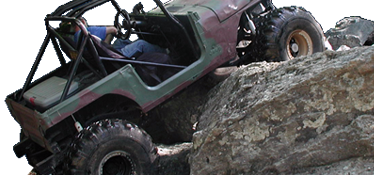
I used the front winch right here to put more weight on the front and transfered the weight to the front wheels, walked right up.
I used the front winch right here to put more weight on the front and transfered the weight to the front wheels, walked right up.
Rich
Asshole at large
- Joined
- Mar 17, 2005
- Location
- Central PA
My front is running off the regular winch, but I bought a Warn 1700 on sale from Northern a while back (and got the no-questions-asked warranty). It's running through a little pulley to act as a snatch block. It can suck the suspension down pretty well into the bump stops, which takes ~3800lbs to fully compress them with the current settings on the coilovers.so do most of you just hook your normal winch up to it, and just unhook when you need it.... or do you use a seperate one? if you use one just for that, how big of a winch do you really need?

paradisePWoffrd
Recovering Project Junkie
- Joined
- Nov 5, 2005
- Location
- Newton, NC
yeah, i was hopin that you could use like an atv winch on the susp, and after i thought about it you would just wanna do some math on your suspension to figure out how much you'd need...
spring rate x distance of compression x 2 x 1.5 = size winch you need
that sound about right? lil diff for multi-rate springs but same gist...
spring rate x distance of compression x 2 x 1.5 = size winch you need
that sound about right? lil diff for multi-rate springs but same gist...
336wheeler
Well-Known Member
- Joined
- Sep 9, 2006
- Location
- Boone
For the ones running these on the front without a roller set-up - have you ever had to use the winch in a climb situation and had to un-hook it from the axle, to be able to run cable? That seems like it would suck. Would it be possible to use nitro charged shocks and just play with the rebounding to have the same effect?
superpile
Probably running in circles
- Joined
- Jan 17, 2006
- Location
- Fairview nc
i've got my front hooked up to the axle, and a small warn 1500 in the rear. I've not actually used the rear on the trail yet, but i use the front all the time. Its amazing the difference it makes in climbing stuff.

I used the front winch right here to put more weight on the front and transfered the weight to the front wheels, walked right up.
Dee Dee after we added some tranny fluid hehehehh damn automatics I want one...

I'm running a warn 1700 mounted to the rear axle on my ftoy with a small snatch block and will be trying to play games to make the front winch capable of sucking the front down. It seems like Dave knows the front winch gets used more for forced articulation than the rear but having the ability to force the rear is handy going down or just trying to force weight to get traction.
I have a cheap 2,000 lb in the rear with a small snatch block and use my front winch on the front. I don't have a big problem with my suspension unloading up and down hills. I use my set up primarily for off camber situations. If I suck the front and rear down I can easily turn around or crawl on the side of a slope. I can get my rig 50 degrees plus and turn up the hill and not roll. I highly recommend them.
Rich
Asshole at large
- Joined
- Mar 17, 2005
- Location
- Central PA
that sound about right? lil diff for multi-rate springs but same gist...
and then don't forget to factor in where the dual rate slider stop is..
 I just pulled my numbers from the coilover calc..
For the ones running these on the front without a roller set-up - have you ever had to use the winch in a climb situation and had to un-hook it from the axle, to be able to run cable? That seems like it would suck. Would it be possible to use nitro charged shocks and just play with the rebounding to have the same effect?
I would think that if you have to ride the cable, you're not as worried about making the front climb as well anymore - you're using the winch now..
But no, you can't play with the shocks to get the same effect, unless you put a vacuum pump and fill setup on some air shocks
336wheeler
Well-Known Member
- Joined
- Sep 9, 2006
- Location
- Boone
Haha, very good point rich. Somehow it didn't occur to me that if they were winching that wouldn't matter. But I guess my question was more for the hassle aspect of having to get the cable to be able to run it. Are the winches spooled in the right orientation to be able to switch to a roller fairlead quickly? Rather newbish questions..
Rich
Asshole at large
- Joined
- Mar 17, 2005
- Location
- Central PA
It's really no big deal. just unhook from the axle, and spool it out the front. takes maybe another 30 seconds to hook up. Some people even run the rope through the fairlead and down to the axle with the hook still on it, meaning it takes no more time than it would otherwise...